
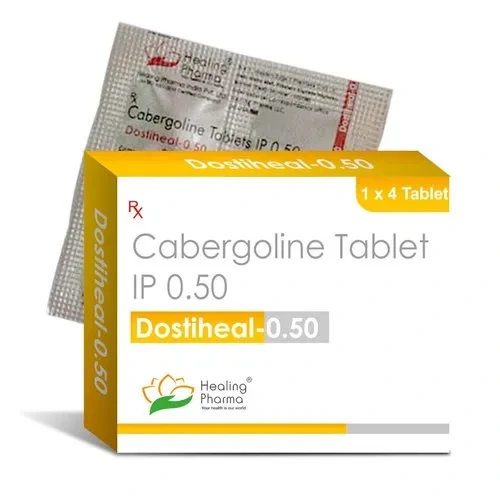

Cabergoline 0.50 Mg
Price range: $220.00 through $400.00
| Quantity Value | Price | Price/Unit | Quantity | Add To Cart |
|---|---|---|---|---|
| 100 Tablet S | $220.00 | $2.20 / Piece |

|
|
| 200 Tablets | $400.00 | $2.00 / Piece |
|
SKU : N/A
Category : Other
Cabergoline 0.50 mg
Cabergoline 0.50 mg is a prescription medicine belonging to a group of drugs known as dopamine agonists. It is primarily used to treat conditions associated with abnormally high levels of the hormone prolactin in the blood, a condition known as hyperprolactinemia. Cabergoline works by stimulating dopamine receptors in the brain, which suppresses the production and release of prolactin from the pituitary gland.
Prolactin is a hormone involved in breast development and milk production. Abnormally high prolactin levels can cause menstrual irregularities, infertility, unexpected milk production, and reduced sexual function. In men, elevated prolactin may contribute to reduced testosterone levels and fertility problems.
Uses of Cabergoline 0.50 mg
Cabergoline is commonly prescribed for the treatment of hyperprolactinemia caused by various conditions, including certain pituitary gland disorders such as prolactin-secreting tumors called prolactinomas.
In women, high prolactin levels can cause irregular or absent menstrual periods, difficulty becoming pregnant, breast milk production unrelated to pregnancy or breastfeeding, and reduced estrogen levels. By lowering prolactin, cabergoline may help restore more normal hormonal function.
In men, hyperprolactinemia can cause decreased libido, erectile difficulties, infertility, and low testosterone levels. Treatment with cabergoline may help reduce prolactin levels and improve associated symptoms when high prolactin is the underlying cause.
Cabergoline may also be prescribed for other medically appropriate purposes involving excessive prolactin production, according to the healthcare professional’s assessment and applicable prescribing guidelines.
How Cabergoline Works
Cabergoline is a dopamine D2 receptor agonist. Dopamine naturally acts on the pituitary gland to inhibit prolactin secretion. Cabergoline mimics this effect by stimulating dopamine receptors, resulting in a reduction in prolactin production.
As prolactin levels decrease, symptoms associated with hyperprolactinemia may improve. In people with prolactinomas, treatment can also reduce the size of the tumor in many cases.
Cabergoline has a relatively long duration of action, which allows it to be taken less frequently than some other medicines used to lower prolactin.
How to Take Cabergoline 0.50 mg
Cabergoline 0.50 mg should be taken exactly as prescribed by a doctor. The dosage and frequency depend on the patient’s prolactin level, underlying condition, response to treatment, and other medical factors.
Treatment is often started at a low dose and adjusted gradually according to blood prolactin measurements and clinical response. Cabergoline is commonly taken once or twice weekly rather than every day, but the exact schedule must be determined by the prescribing healthcare professional.
Taking the medicine with food may help reduce nausea or stomach discomfort in some patients. Tablets should be taken according to the instructions provided with the specific product.
Patients should not increase, decrease, or discontinue cabergoline without medical advice.
Common Side Effects
Possible side effects of cabergoline include nausea, headache, dizziness, tiredness, constipation, abdominal discomfort, and low blood pressure, particularly when standing up.
Some people may experience dizziness or lightheadedness when rising quickly from a sitting or lying position. Getting up slowly can help reduce this effect.
Most side effects may improve as the body becomes accustomed to treatment. However, persistent or severe symptoms should be discussed with a healthcare professional.
Important Safety Information
Cabergoline can cause low blood pressure, especially when treatment is started or the dose is increased. Patients should use caution when standing suddenly and should inform their doctor if they experience fainting or severe dizziness.
Long-term or high-dose treatment may, in some patients, be associated with heart valve problems or fibrotic reactions. Depending on the dose, duration of treatment, and individual risk factors, doctors may recommend appropriate cardiovascular evaluation, including echocardiography.
Cabergoline can also cause unusual behavioral or psychological effects in some people. Patients or family members should report significant changes in behavior, impulse control, mood, or mental state to a healthcare professional.
Pregnancy and Fertility
By lowering prolactin, cabergoline may restore ovulation and fertility in women with hyperprolactinemia. As a result, pregnancy may occur unexpectedly during treatment.
Women who become pregnant while taking cabergoline should contact their healthcare professional for advice about whether treatment should continue. The decision depends on the underlying condition, particularly whether a prolactinoma is present.
Anyone planning pregnancy should discuss cabergoline treatment with their doctor.
Drug Interactions
Certain medicines may interact with cabergoline. In particular, some dopamine-blocking medicines may reduce its effectiveness, while other medicines can affect blood pressure or increase the risk of adverse effects.
Patients should tell their doctor or pharmacist about all prescription medicines, over-the-counter products, vitamins, and herbal supplements they are taking.
Alcohol may increase dizziness or low blood pressure in some patients, so caution is recommended.
Monitoring During Treatment
Patients receiving cabergoline may require regular monitoring of prolactin levels to assess treatment effectiveness. Depending on the underlying condition and duration of therapy, the doctor may also monitor pituitary tumor size, vision, hormonal function, blood pressure, and heart valve health.
Regular follow-up is particularly important for patients receiving long-term treatment.
Storage
Cabergoline 0.50 mg should be stored according to the manufacturer’s instructions, protected from excessive heat and moisture. Keep the medicine out of the reach of children and do not use it after the expiry date.
Conclusion
Cabergoline 0.50 mg is a dopamine agonist primarily used to treat hyperprolactinemia and prolactin-producing pituitary disorders. By stimulating dopamine receptors, it reduces prolactin production and can help restore normal hormonal function, menstrual cycles, fertility, and sexual health when these problems are caused by elevated prolactin.
Because cabergoline can affect blood pressure and, with prolonged treatment, may have effects on heart valves, appropriate medical supervision is important. Patients should follow the prescribed dosing schedule, attend recommended follow-up appointments, and report persistent dizziness, fainting, behavioral changes, breathing difficulties, chest symptoms, or other unusual effects to their healthcare professional.
| Pack Size |
100 Tablet/s ,200 Tablets |
|---|
Related products


Seroflo Ciphaler 250 mcg
Seroflo Ciphaler 250 mcg is a metered-dose inhaler containing salmeterol and fluticasone propionate. It is prepared and handled following standard quality and packaging practices to ensure consistency and reliability.
This product is intended for use under the supervision of a qualified healthcare professional. Usage and administration may vary depending on individual requirements and regional guidelines.