
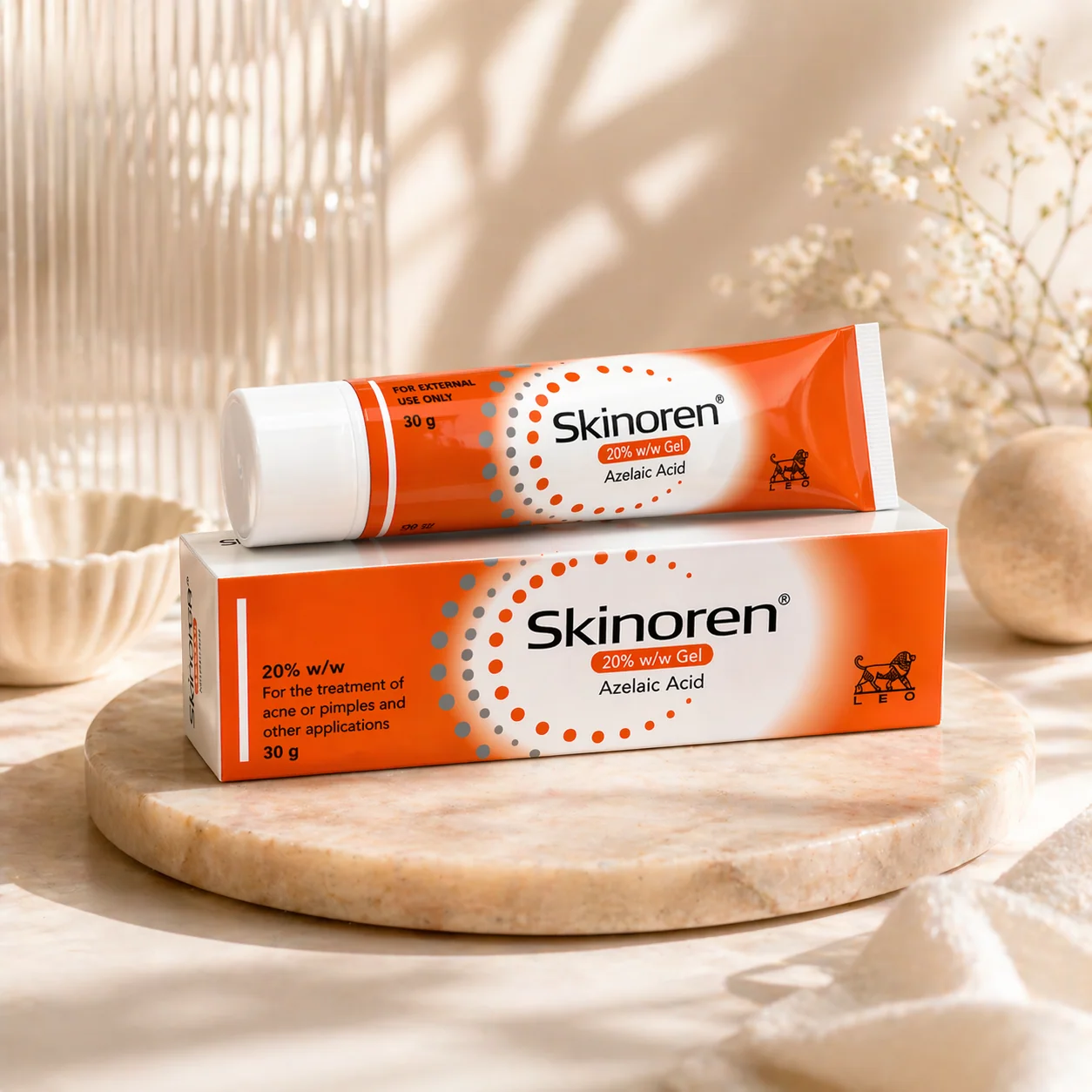
Azelaic Acid Cream 20%
Price range: $30.00 through $140.00
| Quantity Value | Price | Price/Unit | Quantity | Add To Cart |
|---|---|---|---|---|
| 3 Tubes | $30.00 | $10.00 / Piece |

|
|
| 5 Tubes | $45.00 | $9.00 / Piece |
|
|
| 10 Tubes | $80.00 | $8.00 / Piece |
|
|
| 20 Tubes | $140.00 | $7.00 / Piece |
|
SKU : N/A
Category : Skin Care
Learn about Azelaic Acid Cream 20%, including its acne benefits, uses for dark spots, application instructions, side effects, and precautions.
Azelaic Acid Cream 20% – Uses, Benefits, Application, and Skin Care Guide
Product Overview
Azelaic Acid Cream 20% is a topical skincare medication commonly used to help manage acne and certain forms of skin discoloration. Azelaic acid is a naturally occurring dicarboxylic acid with antibacterial, anti-inflammatory, and keratinization-regulating properties. When used as directed, it can help reduce acne-related blemishes, improve the appearance of uneven skin tone, and support a clearer-looking complexion.
For people dealing with acne-prone skin, post-acne marks, or persistent skin imperfections, Azelaic Acid Cream 20% may be a useful part of a dermatologist-recommended skincare routine. Its effectiveness depends on the skin condition being treated, the consistency of application, and individual skin sensitivity.
If you are looking for information about Azelaic Acid Cream 20%, including its uses, benefits, application instructions, and precautions, this guide explains the essential details to help you make informed skincare decisions.
What Is Azelaic Acid Cream 20%?
Azelaic Acid Cream 20% is a topical formulation containing 20% azelaic acid as its active ingredient. It is commonly used in the treatment of acne vulgaris and may be prescribed or recommended by a healthcare professional for appropriate skin concerns.
Azelaic acid works through several mechanisms. It helps reduce the growth of acne-associated bacteria, supports normal skin cell turnover, and has anti-inflammatory properties that may help calm redness associated with acne. It can also inhibit tyrosinase, an enzyme involved in melanin production, which explains its use in managing certain types of hyperpigmentation.
Unlike some stronger exfoliating skincare ingredients, azelaic acid can offer multiple benefits in one topical treatment. However, a 20% concentration may cause irritation, particularly when someone first starts using it. The cream should therefore be used according to the product instructions and advice of a qualified healthcare professional.
Key Benefits of Azelaic Acid Cream 20%
1. Helps Manage Acne-Prone Skin
One of the main uses of Azelaic Acid Cream 20% is the management of mild to moderate acne. It helps reduce acne-associated bacterial activity and supports normal skin cell development within hair follicles. These actions may help reduce the formation of new acne lesions over time.
It may be suitable for people experiencing inflammatory pimples, clogged pores, and recurring blemishes. Results vary, and severe or persistent acne may require additional treatment prescribed by a dermatologist.
2. Helps Improve the Appearance of Dark Spots
Dark marks left behind after pimples can remain visible even after the acne has healed. Azelaic acid can help improve the appearance of certain forms of hyperpigmentation by influencing melanin production.
With consistent use, Azelaic Acid Cream 20% may gradually improve the appearance of post-inflammatory hyperpigmentation. Improvement generally takes time, and daily sun protection is important to help prevent existing marks from becoming darker.
3. Supports a More Even Skin Tone
Uneven skin tone can develop because of acne, inflammation, and excess melanin production. Azelaic acid may help improve the appearance of discoloration while addressing some of the underlying skin concerns.
The degree of improvement depends on the cause and depth of the pigmentation. Not every dark spot responds equally, so persistent or changing patches should be evaluated by a dermatologist.
4. Offers Anti-Inflammatory Benefits
Inflammation contributes to the redness and discomfort associated with some acne lesions. Azelaic acid has anti-inflammatory properties that may help reduce these symptoms as the skin condition improves.
People with sensitive or redness-prone skin should still introduce the product carefully, because irritation is possible even with ingredients that have anti-inflammatory effects.
5. Helps Support Smoother-Looking Skin
By influencing abnormal keratinization, azelaic acid helps reduce the buildup of skin cells that can contribute to blocked pores. As acne becomes better controlled, the skin may gradually appear smoother and more even.
Azelaic acid does not erase deep acne scars or replace procedures used to treat established textural scarring. Its benefits are more relevant to active acne and certain forms of discoloration.
How Does Azelaic Acid Cream 20% Work?
Azelaic acid works through several complementary actions:
- Antibacterial action: Helps reduce acne-associated bacterial activity on the skin.
- Anti-inflammatory action: Helps address inflammation associated with acne.
- Normalization of keratinization: Helps reduce abnormal skin cell buildup that contributes to clogged pores.
- Pigmentation support: Inhibits tyrosinase, an enzyme involved in melanin production, and may help improve certain dark marks.
These effects make Azelaic Acid Cream 20% a treatment option for selected acne and pigmentation concerns. It does not work overnight, and visible improvement typically requires regular use over several weeks.
How to Use Azelaic Acid Cream 20%
Correct application is important for achieving potential benefits while minimizing irritation. Always follow the instructions supplied with your specific product and your healthcare professional’s advice.
- Cleanse your skin: Wash the affected area with a gentle cleanser and pat it dry.
- Apply a thin layer: Use the prescribed amount on the affected skin. Avoid applying excessive quantities.
- Avoid sensitive areas: Keep the cream away from the eyes, lips, inside of the nose, and other mucous membranes.
- Wash your hands: Clean your hands after application unless they are the treatment area.
- Use sun protection: Apply broad-spectrum sunscreen during the day, particularly when treating dark spots or uneven skin tone.
- Maintain consistency: Follow the recommended schedule and allow sufficient time to assess improvement.
Do not apply the cream to broken, severely irritated, or sunburned skin unless specifically instructed by a healthcare professional. Avoid combining it with multiple potentially irritating treatments without professional guidance.
Possible Side Effects of Azelaic Acid Cream 20%
Like other topical treatments, Azelaic Acid Cream 20% may cause side effects. Common reactions include:
- Mild burning or stinging
- Itching or tingling
- Skin dryness
- Redness or irritation
- Peeling or scaling
These effects may be more noticeable during the initial stages of treatment. If irritation persists, becomes severe, or worsens, stop using the product and consult a healthcare professional.
Seek prompt medical attention if you develop facial swelling, blistering, breathing difficulties, or another sign of a serious allergic reaction.
Precautions Before Using Azelaic Acid Cream 20%
Before using Azelaic Acid Cream 20%, tell your healthcare professional about known allergies, existing skin conditions, and other topical products or medicines you use.
People with highly sensitive skin may need a modified application schedule. If you have eczema, damaged skin, or a history of reactions to topical treatments, obtain professional advice before starting.
Pregnant or breastfeeding individuals should discuss treatment suitability with their healthcare professional, even though topical azelaic acid is generally considered to have low systemic absorption.
Avoid getting the product into your eyes or mouth, and do not use it more frequently than directed. If you are using retinoids, exfoliating acids, benzoyl peroxide, or other acne medications, ask whether they can safely be combined with your treatment.
How Long Does Azelaic Acid Cream 20% Take to Work?
The time required to see results varies depending on the condition being treated and the individual’s skin response. Some people notice early improvements in acne within several weeks, while more substantial improvement may take longer.
Dark spots and uneven pigmentation often require several weeks to months of consistent treatment. Using too much cream will not necessarily speed up results and may increase irritation.
Photographing the affected area periodically under similar lighting can help you assess gradual changes. If there is no meaningful improvement after the recommended treatment period, consult a dermatologist about alternative options.
Frequently Asked Questions About Azelaic Acid Cream 20%
1. What is Azelaic Acid Cream 20% used for?
Azelaic Acid Cream 20% is commonly used to treat acne vulgaris. It may also help improve certain types of post-acne discoloration and uneven skin tone when used under appropriate professional guidance.
2. Can Azelaic Acid Cream 20% help with acne marks?
Yes, azelaic acid may gradually improve the appearance of dark marks caused by previous acne. It is not an instant treatment, and sunscreen helps reduce further pigmentation caused by sun exposure.
3. Can I use Azelaic Acid Cream 20% every day?
The recommended frequency depends on the specific formulation, your skin tolerance, and your healthcare professional’s instructions. Follow the product label or prescribed schedule rather than increasing application frequency yourself.
4. Is Azelaic Acid Cream 20% suitable for sensitive skin?
Some people with sensitive skin tolerate azelaic acid, but the 20% concentration can cause burning, stinging, dryness, or redness. Professional guidance is advisable if your skin is easily irritated.
5. Can I use moisturizer with Azelaic Acid Cream 20%?
A gentle, non-comedogenic moisturizer may help reduce dryness. Ask your healthcare professional or pharmacist about the best application order for your specific formulation.
6. Does Azelaic Acid Cream 20% permanently remove dark spots?
It may help improve certain forms of pigmentation, but permanent removal cannot be guaranteed. Pigmentation may return or worsen if the underlying cause continues.
7. Can I combine azelaic acid with other skincare ingredients?
Some combinations are possible, but using several active ingredients together can increase irritation. Seek professional advice before combining it with retinoids, exfoliating acids, or other acne treatments.
Buy Azelaic Acid Cream 20% Responsibly
If you are considering Azelaic Acid Cream 20%, choose a product from a reputable supplier and verify the active ingredient, concentration, manufacturer, and product labeling. Use the cream according to the instructions provided by your healthcare professional.
Before purchasing, check whether the product requires a prescription in your location and whether the seller complies with applicable pharmaceutical regulations. Avoid products with unclear ingredients, misleading claims, or unverifiable sources.
Final Thoughts
Azelaic Acid Cream 20% is a topical treatment option that can help manage acne and improve the appearance of certain types of post-acne pigmentation. Its antibacterial, anti-inflammatory, and pigmentation-related actions make it useful for selected skin concerns, although results vary from person to person.
Consistent application, appropriate sun protection, and a gentle skincare routine can support treatment outcomes. Understanding possible side effects and following professional guidance are equally important. For persistent acne, significant pigmentation, or ongoing irritation, consult a qualified dermatologist to determine the most appropriate treatment plan.
| Pack Size |
10 Tubes ,20 Tubes ,3 Tubes ,5 Tubes |
|---|
Related products
Ashwagandha
Betnovate Cream (Betamethasone)
Betnovate M Cream (Betamethasone/Miconazole)
Betnovate-N Cream
Betnovate-N Cream is a topical product that contains a combination of betamethasone and neomycin. It is formulated for external use and handled following standard quality and packaging practices.
This product should be used under the guidance of a qualified healthcare professional where applicable. Its availability and permitted use may vary depending on regional regulations.