

Blog
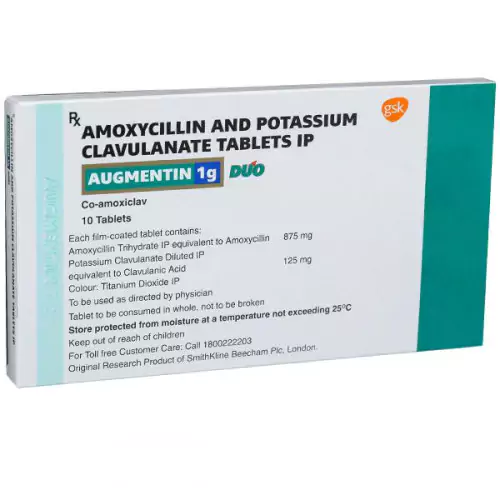
Augmentin 1g: Comprehensive Information on This Powerful Antibiotic Therapy

- Written By : dharmik dharmik
- Published on : December 16, 2025
- Last updated on : December 16, 2025
Bacterial infections can affect different parts of the body and range from mild to severe. In such cases, doctors often prescribe antibiotics that offer reliable and wide-ranging protection. Augmentin 1g is one of the most commonly recommended antibiotics worldwide due to its proven effectiveness against various bacterial strains. This medication is especially useful when standard antibiotics fail to deliver results.
In this blog, we explore Augmentin 1g in detail—what it is, how it functions, when it is prescribed, proper usage, potential side effects, important precautions, and answers to common questions.
Overview of Augmentin 1g
Augmentin 1g is a prescription-only antibiotic designed to combat bacterial infections that may not respond to single-drug treatments. It belongs to the penicillin group of antibiotics and is formulated to improve bacterial coverage and reduce resistance.
Active Components
Augmentin 1g contains:
- Amoxicillin (875 mg): An antibiotic that interferes with bacterial cell wall formation
- Clavulanic Acid (125 mg): A compound that prevents bacteria from breaking down amoxicillin
This dual formulation allows Augmentin to remain effective even against bacteria that have developed protective mechanisms.
Mechanism of Action Explained Simply
Bacteria need strong cell walls to survive. Amoxicillin weakens these walls, leading to bacterial death. However, some bacteria produce enzymes that neutralize antibiotics before they can work.
Clavulanic acid blocks these enzymes, allowing amoxicillin to act freely. As a result, Augmentin 1g delivers a stronger and longer-lasting antibacterial effect compared to amoxicillin alone.
Medical Conditions Treated with Augmentin 1g
Augmentin 1g is prescribed for moderate to severe bacterial infections across different systems of the body.
Respiratory System
- Acute sinus infections
- Lung infections such as pneumonia
- Chronic bronchitis flare-ups
Ear, Nose, and Throat Infections
- Bacterial ear infections
- Severe throat infections
- Tonsillitis
Skin and Tissue Infections
- Infected cuts or wounds
- Cellulitis
- Skin abscesses
Urinary System
- Urinary tract infections
- Kidney-related bacterial infections
Dental and Oral Infections
- Tooth abscesses
- Post-surgical dental infections
Augmentin 1g should only be used when a bacterial cause is confirmed or strongly suspected.
Recommended Dosage and How to Take It
Standard Adult Dosage
- One tablet of Augmentin 1g taken every 12 hours
- Treatment duration usually ranges from 5 to 10 days, depending on the infection
Administration Guidelines
- Take the tablet with meals to minimize stomach discomfort
- Swallow whole with water
- Do not crush or chew the tablet
- Follow the prescribed schedule strictly
Patients with kidney disease, elderly individuals, or children require dose adjustments determined by a healthcare provider.
Why Completing the Course Is Important
Even if symptoms improve early, stopping Augmentin 1g prematurely may:
- Allow bacteria to survive
- Cause the infection to return
- Contribute to antibiotic resistance
Completing the full course ensures complete elimination of harmful bacteria.
Potential Side Effects
Most people tolerate Augmentin 1g well, but side effects may occur.
Common Reactions
- Upset stomach
- Loose stools
- Mild nausea
- Headache
- Temporary skin rash
These effects are usually mild and resolve without treatment.
Serious but Rare Effects
- Severe allergic reactions
- Long-lasting or severe diarrhea
- Liver-related symptoms
- Serious skin reactions
Immediate medical care is required if severe symptoms develop.
Important Safety Precautions
Before starting Augmentin 1g, inform your doctor if you:
- Have a penicillin allergy
- Have liver or kidney problems
- Have experienced antibiotic-related diarrhea
- Have a history of allergic reactions to medicines
Use During Pregnancy and Breastfeeding
Augmentin 1g is commonly considered safe when prescribed by a healthcare professional. However, it should only be used when necessary.
Alcohol Consumption
Alcohol does not directly interfere with Augmentin, but it may intensify side effects such as nausea or fatigue. Avoiding alcohol during treatment is advisable.
Drug Interactions to Be Aware Of
Augmentin 1g may interact with:
- Blood-thinning medications
- Gout medications
- Certain cancer treatments
- Hormonal birth control pills
Always disclose your full medication list to your doctor.
Proper Storage Guidelines
- Store at room temperature
- Protect from moisture and heat
- Keep out of children’s reach
- Dispose of expired tablets properly
Reasons Doctors Trust Augmentin 1g
Healthcare professionals often choose Augmentin 1g because it:
- Treats resistant bacterial infections
- Covers multiple infection types
- Has a long-standing safety record
- Is suitable for outpatient treatment
When used correctly, it offers dependable results.
Frequently Asked Questions (FAQ)
1. Is Augmentin 1g suitable for long-term use?
No, it is intended for short-term treatment as prescribed by a doctor.
2. Can Augmentin 1g be taken without food?
It can be, but taking it with food helps prevent stomach upset.
3. What happens if I miss a dose?
Take it as soon as you remember unless it is near the next scheduled dose.
4. Does Augmentin 1g work for viral infections?
No. It does not treat viruses such as flu or common cold.
5. Can Augmentin 1g cause yeast infections?
In some cases, prolonged use may affect normal bacterial balance.
6. Is diarrhea normal with Augmentin?
Mild diarrhea is common, but severe symptoms should be reported.
7. Can I drive while taking Augmentin 1g?
Most people can, but avoid driving if you feel dizzy or unwell.
Conclusion
Augmentin 1g is a well-established antibiotic designed to fight a wide range of bacterial infections effectively. Its combination of amoxicillin and clavulanic acid makes it especially valuable in treating resistant infections. When taken responsibly under medical guidance, it offers a safe and reliable solution.
Always follow your doctor’s instructions, complete the prescribed course, and seek medical advice if side effects occur.
Table of Contents
Product categories
- AMOXICILLIN
- AZITHROMYCIN
- Cancer
- Cephalexin
- Ciprofloxacin
- CLENBUTEROL
- Colchicine
- Doxycycline
- Erectile Dysfunction
- FENBENDAZOLE & MEBENDAZONE
- Fluconazole
- Fluvoxamine
- Gabapentin
- General
- Generic Paxlovid
- Hdroxychloroquine
- Hormonal
- Infection
- Inhaler & Respules
- Ivermectin
- Low And High Dose Naltrexone
- Metronidazole
- OLANZAPINE & MIRTAZAPINE
- Other
- Pirfenidone
- PREDNISONE
- Psychiatric Medicine
- Skin Care
- Testosterone
- Thyroid
- Viral Care
- VITAMIN B12 & VITAMIN D3
- Weight Loss & Diabetic