
Blog
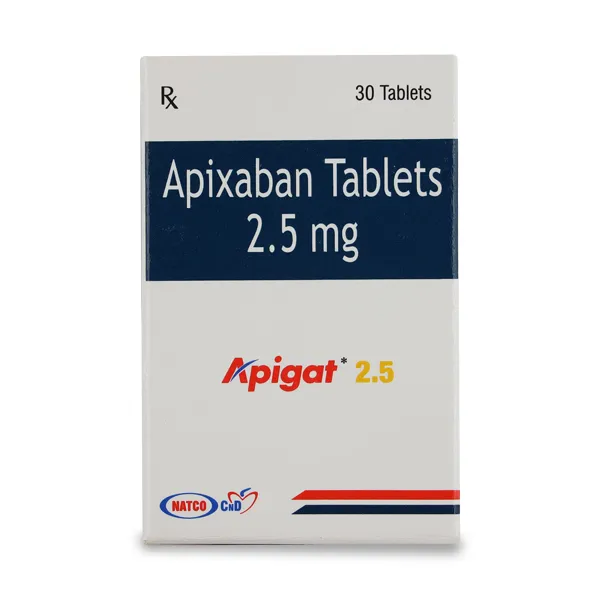
Apixaban Tablets 2.5 mg: Uses, Dosage, Side Effects, and Precautions

- Written By : dharmik dharmik
- Published on : December 9, 2025
- Last updated on : December 10, 2025
Apixaban 2.5 mg tablets are an oral anticoagulant medication widely prescribed to prevent blood clots and reduce the risk of stroke in patients with certain medical conditions. This blog provides detailed, accurate information about Apixaban, including its uses, benefits, dosage, side effects, and precautions, ensuring you are well-informed before use.
What is Apixaban?
Apixaban is a prescription medication that belongs to a class of drugs known as direct oral anticoagulants (DOACs). It works by inhibiting Factor Xa, an essential protein in the blood clotting process. By blocking Factor Xa, Apixaban reduces the formation of blood clots, helping prevent serious cardiovascular events such as strokes, deep vein thrombosis (DVT), and pulmonary embolism (PE).
Apixaban is available in various strengths, including 2.5 mg and 5 mg tablets. The 2.5 mg dosage is commonly used for patients who require a lower anticoagulant effect, often based on their age, weight, kidney function, or overall health condition.
Uses of Apixaban 2.5 mg Tablets
Apixaban 2.5 mg is used in several conditions where blood clot prevention is crucial:
- Prevention of Stroke in Atrial Fibrillation (AF):
Patients with non-valvular atrial fibrillation are at higher risk of stroke. Apixaban helps reduce this risk by preventing clot formation in the heart. - Prevention of Deep Vein Thrombosis (DVT) and Pulmonary Embolism (PE):
After surgeries, especially hip or knee replacement, patients are at risk of developing DVT or PE. Apixaban 2.5 mg is prescribed to prevent these conditions. - Treatment of DVT and PE:
While higher doses are usually used for treatment, some patients may continue on a 2.5 mg maintenance dose after initial treatment to prevent recurrence. - Post-Surgical Clot Prevention:
Apixaban is sometimes prescribed after orthopedic surgeries to prevent clot formation during recovery.
How Apixaban 2.5 mg Works
Blood clotting is a complex process involving several clotting factors. Factor Xa plays a pivotal role in converting prothrombin to thrombin, which ultimately leads to clot formation. Apixaban selectively inhibits Factor Xa, thereby:
- Reducing thrombin production
- Preventing fibrin clot formation
- Lowering the risk of stroke and other clot-related complications
Unlike older anticoagulants such as warfarin, Apixaban does not require routine blood monitoring for INR levels, making it more convenient for long-term use.
Dosage and Administration
Apixaban 2.5 mg tablets should be taken exactly as prescribed by a healthcare professional. Common guidelines include:
- Standard Dose for Stroke Prevention in AF: 2.5 mg twice daily (BID) for patients with risk factors such as age ≥80 years, body weight ≤60 kg, or serum creatinine ≥1.5 mg/dL.
- Post-Surgery Prevention of DVT/PE: Usually 2.5 mg twice daily starting 12–24 hours after surgery.
Important Tips:
- Swallow the tablet whole with water.
- Can be taken with or without food.
- Do not double the dose if you miss one. Take it as soon as possible, then continue the regular schedule.
Side Effects of Apixaban 2.5 mg
Like all medications, Apixaban may cause side effects, though not everyone experiences them. Common side effects include:
- Bleeding: Nosebleeds, gum bleeding, bruising, or prolonged bleeding from cuts
- Anemia: Fatigue or weakness due to reduced red blood cells
- Gastrointestinal Issues: Nausea, vomiting, or mild stomach discomfort
Serious Side Effects (Seek Immediate Medical Attention):
- Unusual or severe bleeding (e.g., in urine or stool)
- Severe headaches, dizziness, or fainting
- Allergic reactions like rash, itching, or swelling
Regular monitoring for signs of bleeding is essential, especially in elderly patients or those taking other medications that increase bleeding risk.
Precautions Before Taking Apixaban
Before starting Apixaban 2.5 mg, consult your doctor about:
- Medical History:
Inform your doctor if you have liver or kidney disease, active bleeding, or a history of stroke or heart attack. - Drug Interactions:
Apixaban may interact with medications such as:
- Other anticoagulants or antiplatelets (e.g., aspirin, warfarin)
- Certain antifungals (e.g., ketoconazole)
- HIV protease inhibitors
- Pregnancy and Breastfeeding:
The safety of Apixaban during pregnancy or breastfeeding is not well established. Only use if prescribed by your doctor. - Lifestyle Considerations:
Avoid activities that increase the risk of injury or bleeding. Inform healthcare providers about your Apixaban use before surgeries or dental procedures.
Storage and Safety Tips
- Store Apixaban tablets at room temperature (20–25°C / 68–77°F)
- Keep in a dry place away from sunlight and moisture
- Keep out of reach of children
- Do not use expired tablets
Frequently Asked Questions (FAQ)
- Can Apixaban 2.5 mg be stopped suddenly?
No. Stopping Apixaban suddenly can increase the risk of stroke or clot formation. Always consult your doctor before stopping. - Do I need regular blood tests while on Apixaban?
Routine INR monitoring is not required, unlike warfarin. However, periodic kidney and liver function tests may be advised. - Can I take Apixaban with food?
Yes, Apixaban can be taken with or without food. - What should I do if I miss a dose?
Take it as soon as you remember. Do not double the dose to make up for the missed one.
Conclusion
Apixaban 2.5 mg tablets are a safe and effective option for preventing blood clots, strokes, and related cardiovascular events under medical supervision. Adhering to the prescribed dosage, understanding potential side effects, and taking necessary precautions can help maximize the benefits of this medication while minimizing risks. Always consult a healthcare professional for personalized advice before starting or adjusting your Apixaban therapy.
Table of Contents
Product categories
- AMOXICILLIN
- AZITHROMYCIN
- Cancer
- Cephalexin
- Ciprofloxacin
- CLENBUTEROL
- Colchicine
- Doxycycline
- Erectile Dysfunction
- FENBENDAZOLE & MEBENDAZONE
- Fluconazole
- Fluvoxamine
- Gabapentin
- General
- Generic Paxlovid
- Hdroxychloroquine
- Hormonal
- Infection
- Inhaler & Respules
- Ivermectin
- Low And High Dose Naltrexone
- Metronidazole
- OLANZAPINE & MIRTAZAPINE
- Other
- Pirfenidone
- PREDNISONE
- Psychiatric Medicine
- Skin Care
- Testosterone
- Thyroid
- Viral Care
- VITAMIN B12 & VITAMIN D3
- Weight Loss & Diabetic