
Blog
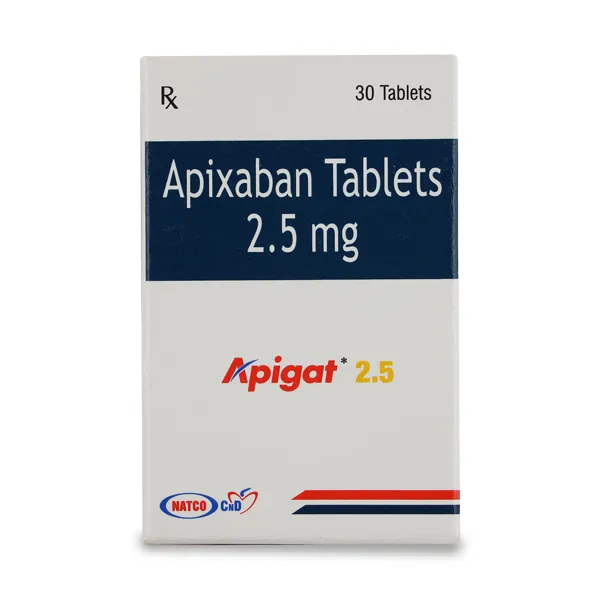
Apixaban Tablets 2.5 mg: Uses, Benefits, Dosage, and Safety Guide

- Written By : dharmik dharmik
- Published on : December 15, 2025
- Last updated on : December 15, 2025
Blood clotting is a natural and essential process of the human body, but when clots form unnecessarily or fail to dissolve properly, they can lead to serious health conditions such as stroke, deep vein thrombosis (DVT), or pulmonary embolism (PE). To prevent and manage such conditions, doctors often prescribe anticoagulant medicines. One of the most commonly used modern anticoagulants is Apixaban Tablets 2.5 mg.
This blog provides a detailed, easy-to-understand guide on Apixaban 2.5 mg, including its uses, working mechanism, dosage, benefits, precautions, side effects, and frequently asked questions.
What Is Apixaban Tablets 2.5 mg?
Apixaban is an oral anticoagulant (blood thinner) that belongs to a group of medicines known as Factor Xa inhibitors. The 2.5 mg strength is a low-dose formulation, commonly prescribed for long-term prevention of blood clots or for patients who require dose adjustment due to age, kidney function, or body weight.
Apixaban does not dissolve existing clots but helps prevent new clots from forming and stops existing clots from getting larger.
How Does Apixaban Work?
Blood clotting involves several steps and clotting factors. One of the key factors is Factor Xa, which plays a major role in forming thrombin — a substance that helps blood clot.
Apixaban works by:
- Selectively inhibiting Factor Xa
- Reducing the production of thrombin
- Preventing excessive clot formation
Because of its targeted action, Apixaban provides effective anticoagulation with a lower risk of bleeding compared to some traditional blood thinners.
Uses of Apixaban Tablets 2.5 mg
Apixaban 2.5 mg is commonly prescribed for the following medical conditions:
1. Prevention of Stroke and Systemic Embolism
In patients with non-valvular atrial fibrillation, Apixaban reduces the risk of stroke caused by blood clots traveling to the brain.
2. Prevention of Deep Vein Thrombosis (DVT)
Apixaban helps prevent blood clots in deep veins, especially after hip or knee replacement surgery.
3. Prevention of Pulmonary Embolism (PE)
It lowers the risk of clots traveling to the lungs, which can be life-threatening.
4. Extended Prevention of Recurrent Blood Clots
The 2.5 mg dose is often used for long-term therapy after completing initial treatment with higher doses.
Dosage and Administration
Recommended Dose
- The usual dose is Apixaban 2.5 mg taken twice daily, unless otherwise directed by a doctor.
How to Take Apixaban
- Take the tablet by mouth with or without food
- Swallow whole with water
- Take it at the same time each day for best results
Missed Dose
- If a dose is missed, take it as soon as remembered on the same day
- Do not double the dose to make up for a missed one
Who Should Take Apixaban 2.5 mg?
This dose is commonly recommended for:
- Elderly patients (usually over 80 years)
- Patients with reduced kidney function
- Patients with low body weight
- Individuals requiring long-term anticoagulation therapy
Always follow your doctor’s advice before starting or changing the dose.
Benefits of Apixaban Tablets 2.5 mg
- Effective prevention of blood clots
- Lower risk of stroke in atrial fibrillation
- No routine blood monitoring required
- Fewer food and drug interactions
- Predictable anticoagulant effect
- Convenient oral tablet form
Possible Side Effects
Like all medicines, Apixaban may cause side effects, though not everyone experiences them.
Common Side Effects
- Easy bruising
- Nosebleeds
- Bleeding gums
- Mild anemia
- Nausea
Serious Side Effects (Seek medical attention immediately)
- Unusual or prolonged bleeding
- Blood in urine or stools
- Severe headache or dizziness
- Vomiting blood
- Sudden weakness or confusion
Precautions and Warnings
Before taking Apixaban, inform your doctor if you:
- Have kidney or liver disease
- Have a bleeding disorder
- Are pregnant or breastfeeding
- Are scheduled for surgery or dental procedures
- Are taking other blood thinners or NSAIDs
Do not stop Apixaban suddenly without consulting your doctor, as this may increase the risk of clot formation.
Drug Interactions
Apixaban may interact with:
- Other anticoagulants
- Antiplatelet drugs (e.g., aspirin)
- Certain antifungal or antibiotic medicines
- Herbal supplements like St. John’s Wort
Always inform your healthcare provider about all medicines and supplements you are taking.
Storage Instructions
- Store at room temperature
- Keep away from moisture and heat
- Keep out of reach of children
- Do not use after the expiry date
Frequently Asked Questions (FAQ)
1. What is Apixaban 2.5 mg used for?
Apixaban 2.5 mg is used to prevent blood clots, stroke, deep vein thrombosis, and pulmonary embolism, especially for long-term or maintenance therapy.
2. Is Apixaban safer than warfarin?
Apixaban generally has fewer food interactions, does not require routine INR monitoring, and has a lower risk of certain bleeding complications compared to warfarin.
3. Can I take Apixaban with food?
Yes, Apixaban can be taken with or without food.
4. How long do I need to take Apixaban?
The duration depends on your medical condition. Some patients may need it for a few months, while others require lifelong therapy.
5. What should I avoid while taking Apixaban?
Avoid activities with a high risk of injury and consult your doctor before using NSAIDs, alcohol, or herbal supplements.
6. Can Apixaban be used in elderly patients?
Yes, Apixaban 2.5 mg is often prescribed to elderly patients due to its safety and adjusted dosing.
Conclusion
Apixaban Tablets 2.5 mg play a vital role in the prevention and management of serious blood clot-related conditions. With its targeted action, predictable results, and convenient dosing, it has become a trusted anticoagulant worldwide. However, as with any blood thinner, it must be used responsibly under medical supervision.
If you have been prescribed Apixaban, follow your doctor’s instructions carefully, stay alert for signs of bleeding, and attend regular follow-ups to ensure safe and effective treatment.
Table of Contents
Product categories
- AMOXICILLIN
- AZITHROMYCIN
- Cancer
- Cephalexin
- Ciprofloxacin
- CLENBUTEROL
- Colchicine
- Doxycycline
- Erectile Dysfunction
- FENBENDAZOLE & MEBENDAZONE
- Fluconazole
- Fluvoxamine
- Gabapentin
- General
- Generic Paxlovid
- Hdroxychloroquine
- Hormonal
- Infection
- Inhaler & Respules
- Ivermectin
- Low And High Dose Naltrexone
- Metronidazole
- OLANZAPINE & MIRTAZAPINE
- Other
- Pirfenidone
- PREDNISONE
- Psychiatric Medicine
- Skin Care
- Testosterone
- Thyroid
- Viral Care
- VITAMIN B12 & VITAMIN D3
- Weight Loss & Diabetic