
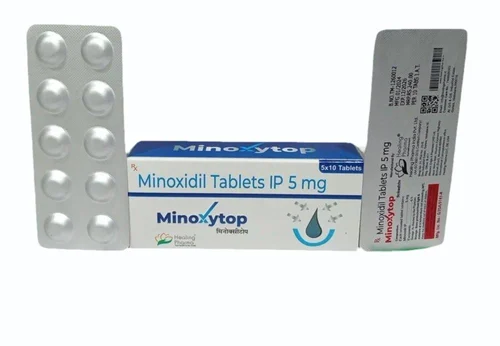


Minoxidil 5 mg tablet
Price range: $25.00 through $200.00
| Quantity Value | Price | Price/Unit | Quantity | Add To Cart |
|---|---|---|---|---|
| 50 Tablets | $25.00 | $0.50 / Piece |

|
|
| 100 Tablets | $46.00 | $0.46 / Piece |
|
|
| 200 Tablets | $88.00 | $0.44 / Piece |
|
|
| 300 Tablets | $125.00 | $0.42 / Piece |
|
|
| 500 Tablets | $200.00 | $0.40 / Piece |
|
SKU : N/A
Category : Other
Minoxidil 5 mg Tablet: Uses, Benefits, Side Effects, and Safety Information
Product Overview
Minoxidil 5 mg Tablet is an oral prescription medication that belongs to a class of medicines known as vasodilators. It works by relaxing blood vessels, helping improve blood flow and reduce high blood pressure in specific medical situations. Oral minoxidil is primarily used by healthcare professionals to manage severe hypertension when other treatments have not provided adequate control. In some cases, doctors may prescribe low-dose oral minoxidil off-label to help manage certain types of hair loss. However, its suitability for hair growth depends on individual medical conditions, and it should only be used under appropriate medical supervision.
Unlike topical minoxidil solutions and foams applied directly to the scalp, Minoxidil 5 mg Tablet is taken by mouth and affects the body systemically. Because oral minoxidil can influence blood pressure, heart rate, and fluid balance, it requires careful consideration before use. Patients should understand its intended purpose, potential benefits, possible side effects, and important precautions before starting treatment.
What Is Minoxidil 5 mg Tablet?
Minoxidil 5 mg Tablet contains minoxidil as its active ingredient. It is a potent vasodilator, meaning it helps widen blood vessels so blood can flow more easily. This action makes it useful in certain cases of severe or difficult-to-control high blood pressure.
Oral minoxidil is different from topical minoxidil products commonly used for hair loss. Although the same active ingredient is associated with hair growth in different formulations, oral tablets have a different safety profile and may cause effects throughout the body. For this reason, Minoxidil 5 mg Tablet should not be treated as a routine hair-growth supplement or used without a healthcare professional’s advice.
Uses of Minoxidil 5 mg Tablet
The use of Minoxidil 5 mg Tablet depends on the reason it has been prescribed by a qualified healthcare professional.
1. Management of Severe High Blood Pressure
Oral minoxidil is used to treat severe hypertension in selected patients when other medicines have not controlled blood pressure adequately. By relaxing blood vessels, it reduces resistance to blood flow and helps lower blood pressure. Because it can cause significant fluid retention and an increase in heart rate, doctors generally use it with appropriate accompanying treatment and monitoring.
2. Off-Label Management of Certain Types of Hair Loss
Healthcare professionals sometimes prescribe low-dose oral minoxidil off-label for selected patients experiencing hair thinning or certain forms of hair loss. This use is different from its established role in treating severe hypertension and may not be suitable for everyone. The evidence, potential benefits, and risks must be assessed by a clinician before treatment begins.
Minoxidil 5 mg Tablet should not be started independently for hair growth. The appropriate treatment depends on the cause of hair loss, the patient’s medical history, and the availability of safer or more suitable alternatives.
How Does Minoxidil Work?
Minoxidil works by relaxing the smooth muscles in blood vessel walls, allowing the vessels to widen. This lowers vascular resistance and helps improve blood flow, which explains its blood-pressure-lowering effect.
When used off-label for hair loss, oral minoxidil is thought to influence hair follicles and support the hair growth cycle in some patients. However, individual responses vary, and improvement is not guaranteed. Hair loss can result from several causes, including nutritional deficiencies, hormonal changes, inherited conditions, stress, and underlying illness. Identifying the cause is important before choosing treatment.
Potential Benefits of Minoxidil 5 mg Tablet
The potential benefits depend on the medical reason for which the medicine is prescribed.
- Blood pressure management: It can help lower severely elevated blood pressure in selected patients when other treatments are insufficient.
- Potential support for hair growth: When prescribed off-label, oral minoxidil may help some patients with particular types of hair loss.
- Clinician-directed treatment: Medical supervision allows healthcare professionals to assess the response to treatment and monitor for adverse effects.
- Individualized care: A doctor can determine whether oral minoxidil is appropriate or whether another treatment offers a better balance of benefits and risks.
These potential benefits should not be interpreted as a guarantee of results. The medicine is not suitable for everyone, and its risks must be considered carefully.
How to Take Minoxidil 5 mg Tablet
Take Minoxidil 5 mg Tablet only as prescribed by your healthcare professional. The dose, timing, and duration depend on the condition being treated and your individual health profile. Do not start treatment, change the dose, or stop the medicine without medical advice.
For patients receiving oral minoxidil for high blood pressure, regular blood pressure and heart-rate monitoring may be necessary. A clinician may also monitor body weight, swelling, and other signs of fluid retention. In some treatment plans, additional medicines are required to manage these effects.
If oral minoxidil has been prescribed off-label for hair loss, follow the prescriber’s instructions and attend recommended follow-up appointments. Do not assume that a dose used by another person is suitable for you. Never take extra tablets to try to achieve faster blood pressure control or quicker hair growth.
Possible Side Effects of Minoxidil 5 mg Tablet
Minoxidil 5 mg Tablet may cause side effects because it affects blood vessels and circulation. Possible adverse effects include:
- Dizziness or light-headedness
- Headache
- Increased heart rate or palpitations
- Swelling of the feet, ankles, or hands
- Unwanted hair growth in areas other than the scalp
- Weight gain associated with fluid retention
- Changes in blood pressure
Some side effects may require medical attention. Seek urgent medical care if you experience chest pain, difficulty breathing, fainting, a rapid or irregular heartbeat, or sudden or significant swelling. Oral minoxidil can rarely cause serious fluid accumulation around the heart, known as pericardial effusion.
Contact your healthcare professional if side effects persist, worsen, or interfere with daily activities. Do not attempt to manage serious symptoms by changing the dose yourself.
Precautions and Warnings
Before using Minoxidil 5 mg Tablet, inform your doctor about your complete medical history and all medicines you take. Particular care may be needed if you have heart disease, a history of pericardial disease, kidney problems, or conditions that affect fluid balance.
Tell your healthcare professional if you are pregnant, planning pregnancy, or breastfeeding. They can assess the potential risks and determine an appropriate treatment plan.
Minoxidil may interact with other blood-pressure medicines and treatments that affect heart rate or fluid balance. Do not combine it with other medications without checking with a qualified healthcare professional.
Avoid driving or operating machinery if the medicine causes dizziness or light-headedness. Follow medical advice about monitoring blood pressure, heart rate, body weight, and swelling.
Storage Instructions
Store Minoxidil 5 mg Tablet according to the instructions on its packaging. Keep it in a dry place away from excessive heat and direct sunlight, and store it out of the reach of children and pets. Do not use tablets past their expiry date or if the packaging appears damaged. Ask a pharmacist how to dispose of unused medicine safely.
Frequently Asked Questions (FAQs)
1. What is Minoxidil 5 mg Tablet used for?
Oral minoxidil is primarily prescribed for selected cases of severe hypertension. Healthcare professionals may also prescribe oral minoxidil off-label for certain types of hair loss after assessing the patient’s individual risks and potential benefits.
2. Can Minoxidil 5 mg Tablet help with hair growth?
It may help some patients when prescribed off-label for specific types of hair loss. Results vary, and treatment should only be considered under medical supervision because oral minoxidil can affect blood pressure, heart rate, and fluid balance.
3. Is oral Minoxidil 5 mg the same as topical minoxidil?
No. Oral minoxidil is swallowed and affects the body systemically, while topical minoxidil is applied to the scalp. Their uses, dosing, and safety considerations differ.
4. What are the common side effects of Minoxidil 5 mg Tablet?
Possible side effects include dizziness, headache, a faster heartbeat, swelling, fluid-related weight gain, and unwanted hair growth. Serious symptoms such as chest pain, difficulty breathing, fainting, or significant swelling require urgent medical attention.
5. Can I take Minoxidil 5 mg Tablet without a prescription?
No. Oral minoxidil should only be used under the guidance of a qualified healthcare professional. Self-medication can lead to dangerously low blood pressure, heart-related complications, or fluid retention.
6. How should Minoxidil 5 mg Tablet be stored?
Keep the medicine in its original packaging, away from excessive heat and moisture, and out of children’s reach. Follow the storage directions printed on the product packaging.
Important Medical Disclaimer
This information is provided for general educational purposes and should not replace professional medical advice, diagnosis, or treatment. Minoxidil 5 mg Tablet is a prescription medicine with potentially serious cardiovascular side effects. Use it only under the supervision of a qualified healthcare professional. Do not start, stop, or change your medication without consulting your doctor.
Conclusion
Minoxidil 5 mg Tablet is an oral vasodilator used primarily for selected cases of severe high blood pressure. In certain circumstances, healthcare professionals may also prescribe oral minoxidil off-label for specific types of hair loss. Its potential benefits must be weighed against risks such as low blood pressure, increased heart rate, swelling, and fluid retention. Understanding its uses, precautions, and possible side effects can help patients have informed discussions with their healthcare professionals and make safer, medically guided treatment decisions.
| Pack Size |
100 Tablets ,200 Tablets ,300 Tablets ,50 Tablets ,500 Tablets |
|---|